You might want to include social auth in your site to make it easier for users to sign up without creating a new set of login credentials. Furthermore, if your application intends to access the user's data from a third-party service, linking the accounts during authentication simplifies the process of granting permissions. I believe every application requires an admin panel—if not yet, it's simply a matter of time until your basic application needs one. With Django admin, you can create one quickly and flexibly.
Django's permission framework does not have a place to store permissions for anonymous users. Djoser library provides a set of views to handle basic actions such as registration, login, logout, password reset and account activation. The package works with a custom user model and uses token-based authentication.

This is ready to use REST implementation of the Django authentication system. By default, the only two fields that are required for a user are username and password. If you don't want to use any of the other fields, simply ignore their existence, as a user can be created without a first name, last name, or email address. There is a collection of default fields like last_login and date_joined that can also be ignored if you don't want them.

If you had an actual technical constraint that required dropping optional fields from the user model, you would already know about it and wouldn't need this article. In development mode—python manage.py runserver—Django searches for static files using the STATICFILES_FINDERS setting. By default, it tries to find the requested static file in folders listed in the STATICFILES_DIRS setting.

This allows you write reusable applications which are shipped with their own static files. Using related models results in additional queries or joins to retrieve the related data. Django includes substantial password management middleware with the user model. User passwords are required to be at least 8 characters, not entirely numbers, not match too closely to the username, and not be on a list of the 20,000 most common passwords.

When a password is sent to the server, it is encrypted before it is stored, by default using the PBKDF2 algorithm with a SHA256 hash. Overall, the default password system provides robust security without any effort from the developer. Unless you have specific expertise and a compelling reason to change the way passwords are handled in your application, don't modify this behavior. User objects are the core of the authentication system. They typically represent the people interacting with your site and are used to enable things like restricting access, registering user profiles, associating content with creators etc. If this last rule is true, then theget_readonly_fields() method sets all the model form fields to read-only, which is the whole purpose theget_readonly_fields() method.

If this last rule is false, then the get_readonly_fields() method returns its default behavior calling the parent class's defaultget_readonly_fields() method. The Django admin application can use your models to automatically build a site area that you can use to create, view, update, and delete records. This can save you a lot of time during development, making it very easy to test your models and get a feel for whether you have the right data. The admin application can also be useful for managing data in production, depending on the type of website.

One other convenient built-in is the requirement that usernames are unique. Unfortunately for them, the second user to try to register with "djangofan1" will have to pick a different name, perhaps "djangofan2". This uniqueness constraint is enforced at the database level but is again verified by the forms that Django provides. The other benefit of a user account is storing personalized data to the database.

By default, Django only requires a username and password but provides optional fields for users to enter their first name, last name, and email address. You can read a complete model reference on the Django website. A while back I had a Django application in which I needed registered users able to view, create, update and delete objects in my system. These objects were instances of only a subset of all the Django models.Model subclasses I had defined in the models.py file of my application. Installed, the admin provides a convenient way to view and manage users, groups, and permissions.

Users can be created and deleted like any Django model. Groups can be created, and permissions can be assigned to users or groups. A log of user edits to models made within the admin is also stored and displayed. In production, you serve your static using a standalone web server like Nginx. The web server knows nothing about the Django project applications structure or which folders your static files are distributed in. This allows for resolution of static file resources using the same logic as Django development mode server and has all static files in one place for your web server.

Writing, deploying, and administering a static website is about an order of magnitude easier, cheaper, and more secure than a dynamic site. Thus, you should only create a dynamic website if the dynamic paradigm's additional capabilities are necessary for your project. Django simplifies and streamlines the process of creating a dynamic site with its built-in components. As one of the primary components of a dynamic web application, the "user account" object, like the wheel, is tempting to re-invent, but the standard shape is appropriate for most uses. Django provides a powerful out-of-the-box user model, and in this article, we'll walk through the best way to provide secure, intuitive user authentication flows. Now that we've setup our login, let's start building the post functionality.

Our app will allow users to create new posts, and view a feed of posts. To support this, we will create a Post model that stores the post information in our database. First we are going to create a User model to represent users in our app. This model will be used to store User information in our database.

Django has a built-in authorization system that handles things like password management, login, logout, and user sessions. A custom User model provides flexibility to add attributes later to our User. Keeping all user related information in one model removes the need for additional or more complex database queries to retrieve related models. On the other hand, it may be more suitable to store app-specific user information in a model that has a relation with your custom user model.

That allows each app to specify its own user data requirements without potentially conflicting or breaking assumptions by other apps. It also means that you would keep your user model as simple as possible, focused on authentication, and following the minimum requirements Django expects custom user models to meet. Each model has a list of individual records, identified by the string created with the model's __str__() method, and linked to detail views/forms for editing. By default, this view has an action menu at the top that you can use to perform bulk delete operations on records. On line 3, we import the authentication views from django.contrib.auth and add four new path statements to our site URLs . Once Django detects a URL named admin_password_reset, it will automatically add a password reset link to the login form (Figure 7-19).

If you're using function based views you can simply restrict all access to the view to users who are logged in, by decorating the function with the @login_required decorator. Django-rest-authemail provides a RESTful API interface for user signup and authentication. Email addresses are used for authentication, rather than usernames. A fully functional example project and detailed instructions are included. Ultimately whenever someone would request the given admin page then, we shall call this methods and always get False, that is how we are going to make our Admin page as ReadOnly. Permissions can be set not only per type of object, but also per specific object instance.

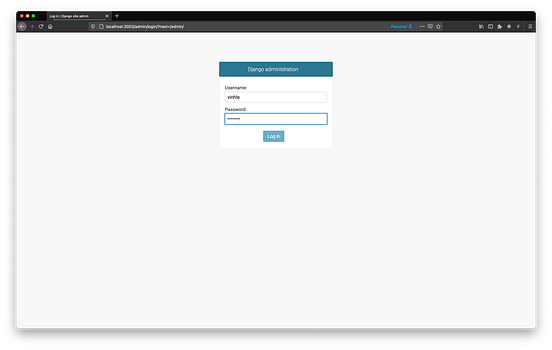
In order to log into the admin site, we need a user account with Staff status enabled. In order to view and create records we also need this user to have permissions to manage all our objects. You can create a "superuser" account that has full access to the site and all needed permissions using manage.py.

After registering the models we'll show how to create a new "superuser", login to the site, and create some books, authors, book instances, and genres. These will be useful for testing the views and templates we'll start creating in the next tutorial. The superuser we created earlier has full access to all models in the admin and can add, change, and delete any model record. In a real application, you will want to limit the number of users who have full access to your site. If not it will handle it just like a normal permission error and either redirect the user to the login page, or raise an HTTP 403 error.

When it comes to class based views you can add restrictions by permission in very similar manner to when you restricted the view to logged in users above using the LoginRequiredMixin. Go to the admin dashboard, sign in with your superuser account you created at the beginning, and check out the models. Django-adminThis interface is not informative for the users who want to see the data. To improve that, we can create a ListAdminMixin, which will populate list_display with all the fields in the model.
To use it, you must have django.contrib.auth.backends.RemoteUserBackend in yourAUTHENTICATION_BACKENDS setting. By default, RemoteUserBackend creates User objects for usernames that don't already exist. To change this and other behaviour, consult theDjango documentation. A common reason you might want to drop a field in the user model is to drop the username in favor of the email as a unique identifier.
In that case, when creating the user from form data or authenticating a request, simply enter the email address as the username in addition to its use in the email field. The username field will still enforce the uniqueness constraint when usernames are formatted as email addresses. While a user has an active session on their device, they will register as True for the request.user.is_authenticated check.

Another way to restrict pages to logged-in users only is the @login_required decorator above a function. There are multiple other ways of achieving the same, detailed here. This allows you use it multiple times from multiple sources (admin interface UI, front-end UI, API endpoints, multiple views) in a few lines of code instead of copy-pasting tons of code.

So next time you're sending a user an email, extend the model with an email function instead of writing this logic in your controller. You can find the final code for both options, AbstractUser and AbstractBaseUser, in the django-custom-user-model repo. The final code examples include the templates, views, and URLs required for user authentication as well. The first step highlighted in listing is the Item model with a custom permission named read_item with the friendly name'Can read item'.

After you run the Itemmodel in listing through its corresponding migration, theItem model will get a custom read_itempermission. Next, create a staff user and assign it both theread_item and built-in change permission of Item model. Once a staff user is given these permissions, you must enforce the Django admin class for theItem model only allow read access to users with these permissions.
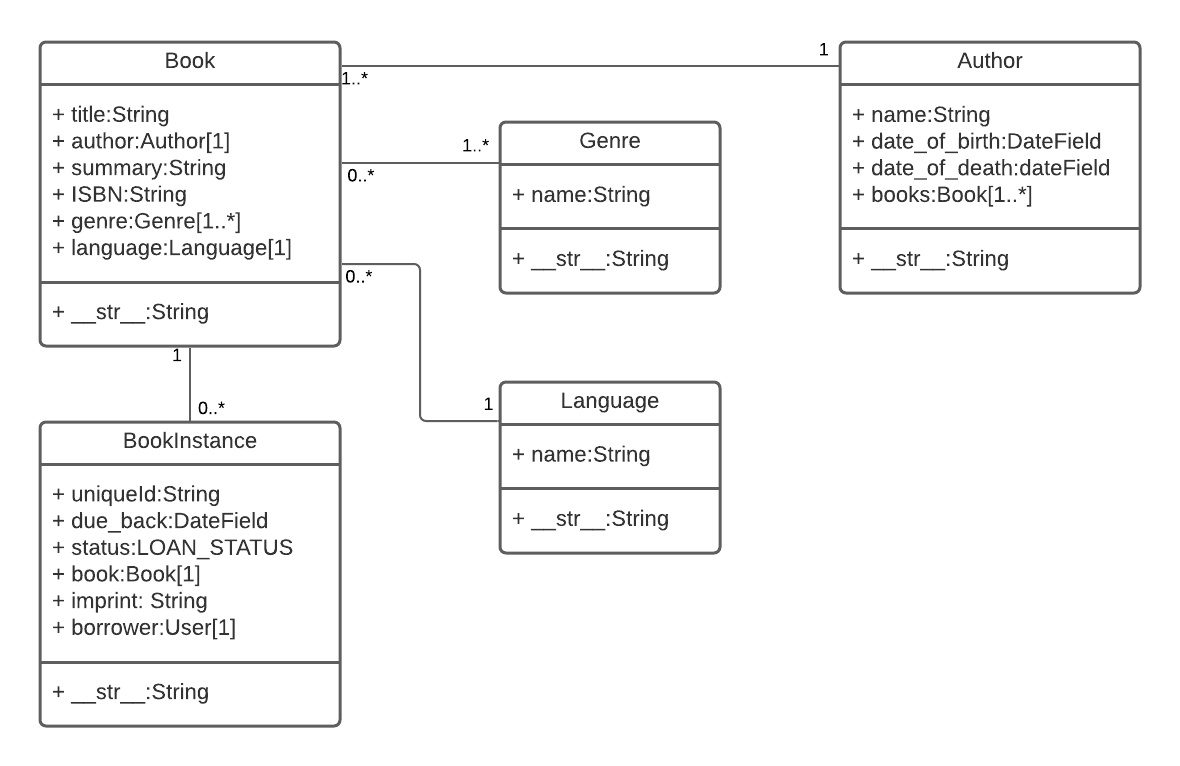
Along the way you've created a bunch of Books, BookInstances, Genres, and Authors that we'll be able to list and display once we create our own view and templates. All the configuration required to include the admin application in your website was done automatically when you created the skeleton project . As a result, all you must do to add your models to the admin application is to register them. At the end of this article we'll provide a brief demonstration of how you might further configure the admin area to better display our model data. In line 2, we've imported the User model from django.contrib.auth.models.

In line 10, we've changed the manager field to a ForeignKey field that links to the User model. The on_delete option is set to SET_NULL so if a user is deleted, all events they managed have their manager ID set to NULL. LogEntry.change_message¶The detailed description of the modification. In the case of an edit, for example, the message contains a list of the edited fields. The Django admin site formats this content as a JSON structure, so thatget_change_message() can recompose a message translated in the current user language.

You are advised to use the get_change_message() method to retrieve this value instead of accessing it directly. In settings.py we'll add the accounts app and use the AUTH_USER_MODEL config to tell Django to use our new custom user model in place of the built-in User model. At first when I read this I got all excited that this feature comes built in to Django, but hold your horses, it is not as amazing as it seems. These features only work if you're using the Django Admin. When you have the django.contrib.auth app specified in your INSTALLED_APPS setting, it will make sure that 4 permissions are added to all the models of your application by default.

With Auth0, you simply connect your account, and Auth0 will handle all of the authentication stuff for you. You just rely on Auth0 to identify your users through authentication. This obviously saves a ton of time because you don't need to write the same code over and over again. Login code is both common to every app yet easy to mess up, so by using Auth0, you will save a ton of time authenticating with your app. Also, you can change how your app handles authentication at any time through the Auth0 dashboard. For example, if you want to add a new social provider, you can do it within minutes on the dashboard instead of writing any code in your app to handle a new social login.

Now that the moderators can see reported posts, you want to allow the moderator to block users and hide posts. You can create a view that requires a change post permission. From there, you will get the post and hide it by updating the hidden, date_hidden, and hidden_by fields on the post. You will need the datetime object to get the current date. Django Highlights is a series introducing important concepts of web development in Django.

These articles are mostly constructed to help you gain an understanding of theory and convention but contain some code samples, which are written in Django 3.0. Several concepts that we touched on in this article, including templates, admin users, models, and forms, will be explored individually in detail in future articles in this series. Permissions are objects that determine access to resources.

For example, they might have read access to a table of products and write access to a table of customers. The exact implementation of permission varies substantially by application but Django's approach makes it intuitive to define permissions for data and assign those permissions to users. If this level of configuration is more than you want to perform, there is an even more out-of-the-box approach to user management. To make it easy to include Django's permission framework into your own user class, Django provides PermissionsMixin. This is an abstract model you can include in the class hierarchy for your user model, giving you all the methods and database fields necessary to support Django's permission model.

